Why local manufacturing, more reliable supply chains and better building systems matter for construction in Belize and across the Caribbean.
Construction across the Caribbean faces a challenge that goes beyond the cost of building materials. Developers are investing in homes, hotels, commercial buildings and infrastructure, yet many projects remain dependent on imported products, international shipping schedules and construction methods that have changed relatively little over decades.
For contractors and developers, these conditions can create uncertainty in material availability, project scheduling and long-term building performance. Insulated Concrete Form (ICF) construction offers an alternative worth evaluating, particularly as regional manufacturing makes the technology more accessible.
At StelCor Solutions, we manufacture ICF blocks in Belize and are developing regional supply partnerships. The broader opportunity extends beyond one product: creating a more capable and dependable Caribbean construction industry.
The challenge with Caribbean construction supply chains
Building in the Caribbean is different from building in larger continental markets. Many construction materials must be imported, and freight costs, port operations, customs procedures and shipping availability can all influence project timelines.
In a May 2026 analysis, the Central Bank of Barbados discussed the vulnerability of import-dependent sectors, including construction, to supply disruptions. The specific circumstances differ by country, but the broader concern is familiar across Caribbean markets.
For developers, the key question is not only whether a material has a competitive purchase price, but whether it will be available in the required quantities when the project needs it. Regional manufacturing can create additional sourcing options.
Why locally manufactured ICF blocks matter
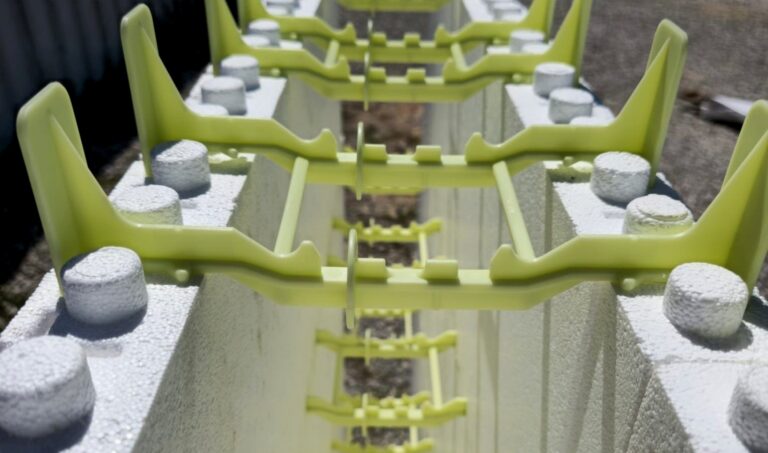
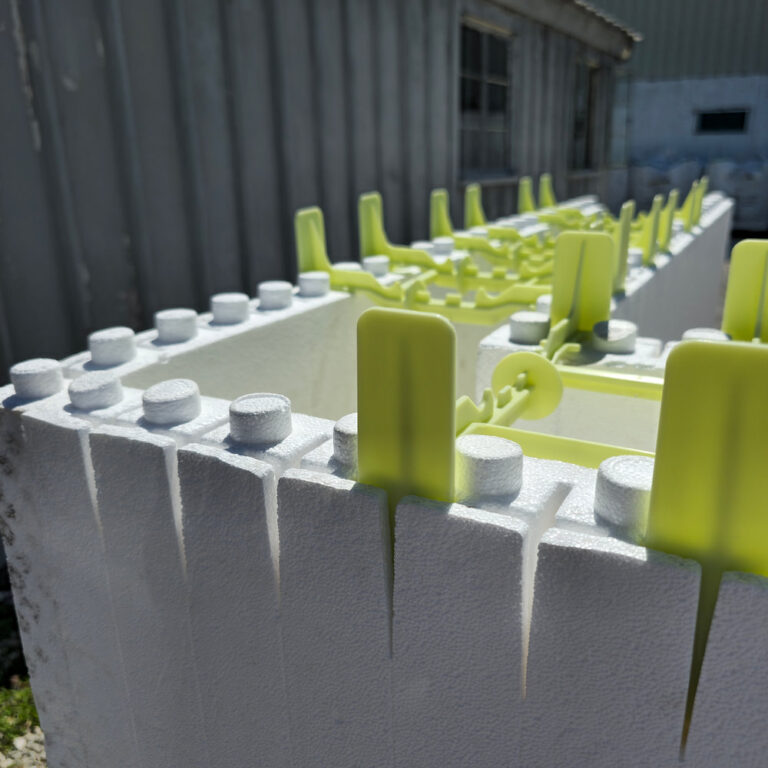
Insulated Concrete Forms are an established technology. ICF systems use insulating forms around a reinforced concrete core, leaving the forms permanently in place after the concrete is poured.
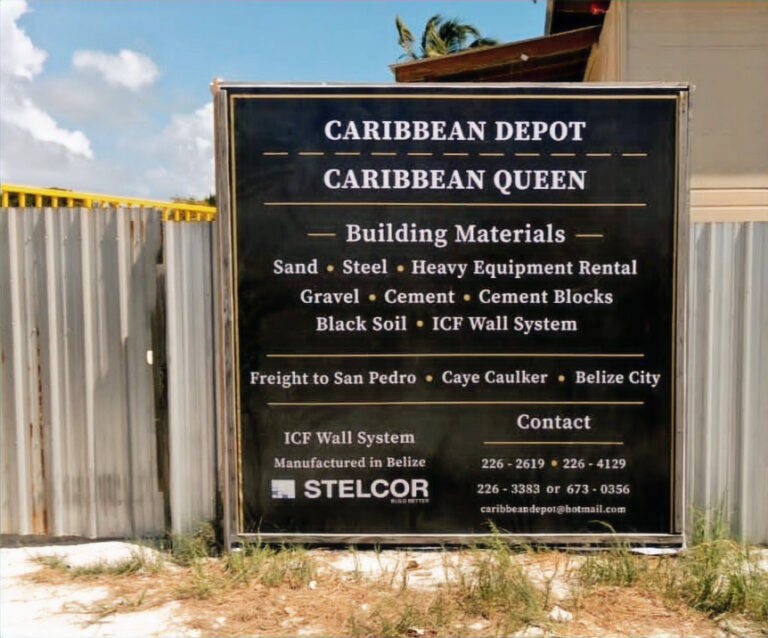
Historically, Caribbean projects considering ICF have often relied on imported finished form systems. StelCor Solutions manufactures ICF blocks in Belize, offering a regional source for contractors and developers.
More responsive material supply
For projects in Belize, local manufacturing can simplify coordination between production and job-site deliveries. Across other markets, regional supply creates an additional option, although actual freight costs, lead times and delivered prices must be assessed for each destination.
Closer coordination with contractors
Regional production gives manufacturers and contractors an opportunity to coordinate material quantities, installation considerations and construction sequencing earlier in the process, particularly when crews are working with a new building system.
Local employment and technical capability
Manufacturing also involves production staff, maintenance, quality control, equipment expertise, distribution and installation training. Developing those capabilities locally strengthens the wider construction supply industry.
A foundation for regional distribution
Successful distribution requires more than exporting blocks: it depends on reliable production, capable local partners, training, competitive delivered prices and realistic shipping arrangements.
What is ICF construction, and how does it work?
Insulated Concrete Form construction uses lightweight expanded polystyrene (EPS) forms assembled to create a cavity for steel reinforcement and poured concrete. Once cured, the concrete provides the structural core while the forms remain as continuous insulation.
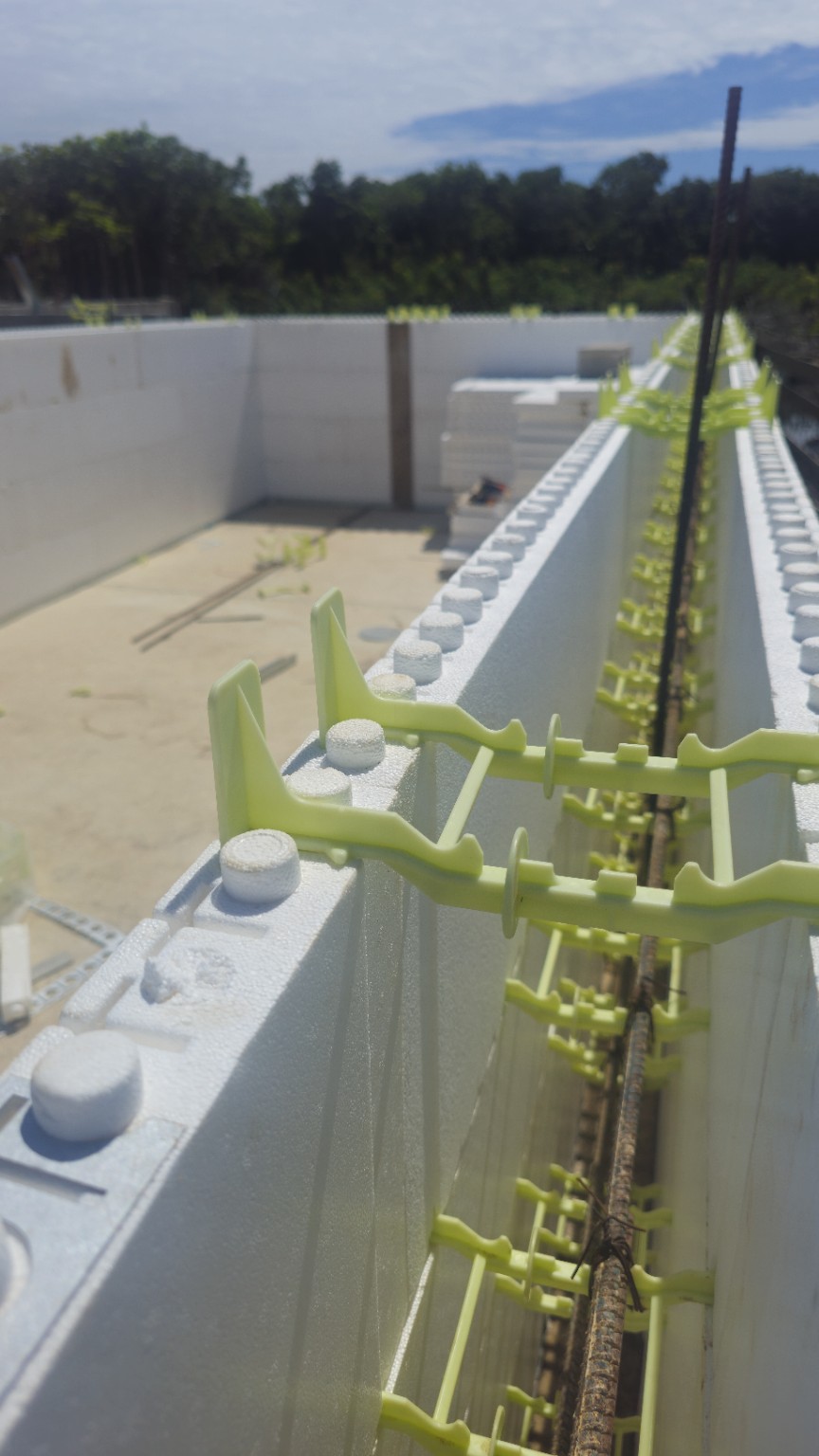
Unlike conventional concrete block construction, where structural masonry and insulation may be installed separately, ICF integrates permanent formwork and insulation into the wall assembly.
The U.S. Department of Energy describes ICF benefits including continuous insulation and reduced thermal bridging. The actual performance of any building depends on design and installation.
See StelCor’s ICF wall systems for a closer look at the product.
Why evaluate ICF construction in tropical climates?
Continuous insulation and thermal performance
EPS on both sides of the concrete core can help limit unwanted heat transfer through walls. In air-conditioned buildings, a properly designed building envelope can reduce cooling demand. Savings will vary according to the roof, windows, solar exposure, ventilation, air sealing and cooling system.
Reinforced concrete construction
ICF walls use an engineered reinforced-concrete core. In hurricane-prone regions, the full structural design matters: foundations, reinforcement, roof connections, openings, workmanship and local design requirements are all essential. No wall system should be treated as automatically hurricane-proof.
Acoustic comfort
The combined concrete mass and insulation layers may help reduce sound transmission, a useful consideration for housing, hospitality and properties near busy roads.
Integrated wall assembly
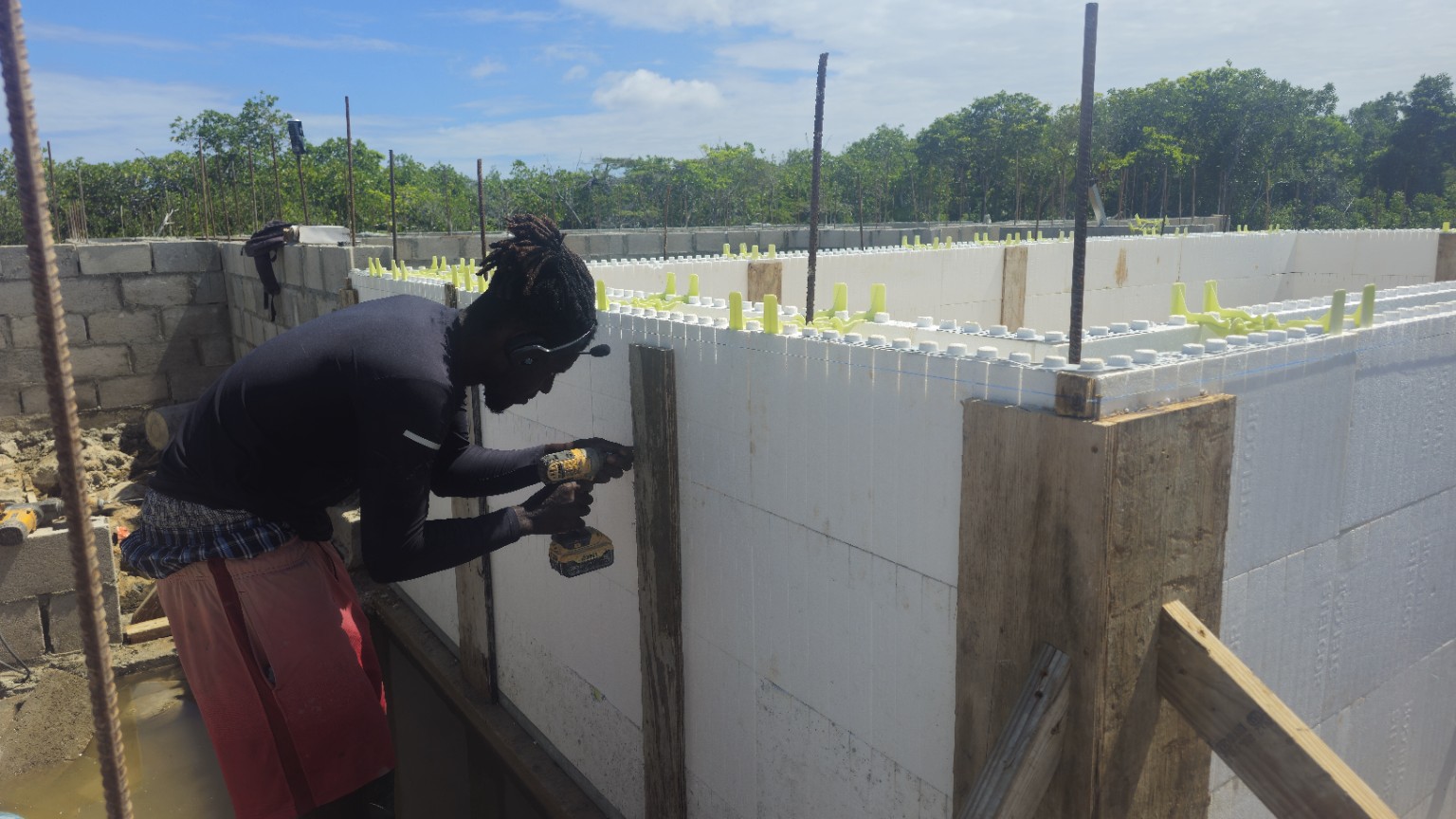
ICF combines permanent formwork and insulation in one system. Installation productivity depends on crew training, design complexity, bracing, concrete placement and site logistics; faster construction should never be assumed without a project-specific comparison.
ICF vs. concrete block: Compare installed cost, not block price
A common question is whether ICF costs more than conventional concrete masonry units. There is no universal answer. Comparing the purchase price of a single ICF block with one conventional concrete block is not a meaningful comparison of complete wall assemblies.
ICF requires forms, concrete, reinforcement, accessories, bracing, labor and finishes. Concrete block construction has its own masonry materials, reinforcement, grout, labor, finishes and insulation requirements where specified.
For a useful comparison, developers should evaluate:
- Materials: forms or blocks, concrete, steel, insulation, accessories and finishes
- Labor: installation productivity, contractor experience and training
- Logistics: freight, handling, access and delivery timing
- Engineering: wall design, connections and structural requirements
- Scheduling: effects on the full construction sequence
- Building performance: thermal behavior, maintenance and operating costs
The right starting point is a detailed material takeoff from project drawings. Request a preliminary ICF materials estimate.
Where can ICF construction be used in the Caribbean?
Homes and housing developments
Residential projects can benefit from a reinforced concrete wall assembly with integrated insulation. Repeated wall layouts may simplify procurement and planning for multi-unit developments.
Hotels and resorts
Hospitality projects can evaluate ICF as part of an integrated strategy for guest comfort, sound control, energy performance and long-term maintenance.
Commercial and mixed-use buildings
Offices, retail and mixed-use projects may benefit from continuous wall insulation and engineered concrete construction, subject to project requirements.
Schools and public facilities
Institutional projects often prioritize comfort, durability and service life. ICF is one system that design teams can compare with alternatives.
What should Caribbean developers check before choosing ICF?
- Engineering: confirm wall thicknesses, reinforcement, foundations and connections.
- Design: review dimensions, openings, floor interfaces and architectural details.
- Contractor readiness: establish training and supervision requirements.
- Supply: verify quantities, production lead times and delivery logistics.
- Cost: compare full installed wall assemblies.
- Performance: consider insulation, moisture control, finishes and maintenance.
These decisions are best considered before finalizing the construction package. Review StelCor’s contractor resources for project planning support.
Building construction manufacturing capacity in Belize
StelCor’s approach is based on a practical proposition: the Caribbean should manufacture more of the construction products it needs wherever that is technically and commercially sensible.
Our ICF manufacturing operation in Belize is part of that effort. We work with contractors, developers and distribution partners to improve access to the system.
Manufacturing alone is not enough. Successful regional adoption also requires trained crews, accurate estimates, engineering coordination, reliable delivery and local partners who understand real construction conditions. These capabilities develop through investment and execution, not product marketing alone.
Frequently asked questions about ICF construction in the Caribbean
What is ICF construction?
ICF stands for Insulated Concrete Forms. The system uses insulating forms around a reinforced concrete core, combining structural concrete with continuous wall insulation.
Are ICF blocks manufactured in Belize?
Yes. StelCor Solutions manufactures insulated concrete form blocks in Belize and works with contractors and regional distribution partners.
Is ICF suitable for hurricane-prone Caribbean countries?
ICF can be used in buildings designed for hurricane-prone conditions. Actual wind resistance depends on the complete engineered building, including reinforcement, openings, foundations and connections.
Is ICF cheaper than concrete block?
Not necessarily. A project-specific comparison must include complete installed costs, not just material unit prices.
Can ICF reduce air-conditioning costs?
Continuous insulation can help limit heat transfer and reduce cooling demand, but actual savings depend on the full building design and use.
Can StelCor supply other Caribbean countries?
StelCor is developing regional supply opportunities from Belize. Availability, pricing and arrangements depend on shipping, quantities and local distribution support.
The future of Caribbean construction starts with better systems
The Caribbean will continue to use conventional construction methods and imported materials. The opportunity is to create better choices: more reliable regional supply, improved building performance, stronger technical skills and more predictable project planning.
At StelCor Solutions, we believe ICF construction can play a meaningful role in that future. Building better means improving not only the finished structure, but also the system that makes construction possible.
Plan your ICF project with StelCor Solutions
Considering ICF for a home, commercial property or hospitality development in Belize or the wider Caribbean? StelCor Solutions manufactures insulated concrete forms in Belize and supports projects through material planning and regional partnerships.
Explore our ICF wall system or request an ICF materials estimate. For regional partnership inquiries, visit StelCor Solutions.